Situation
Being and NothingnessSituation is the concrete relation between freedom and the given world: a person encounters facts, objects, bodily limits, and other people through ends that freedom projects, while those facts in turn resist or enable action. It is neither a neutral container nor a private state of mind. The concept gathers facticity and freedom into one lived structure, explaining how a world can constrain action without determining it and how freedom can act only amid conditions it did not create.
Definition: freedom and the given
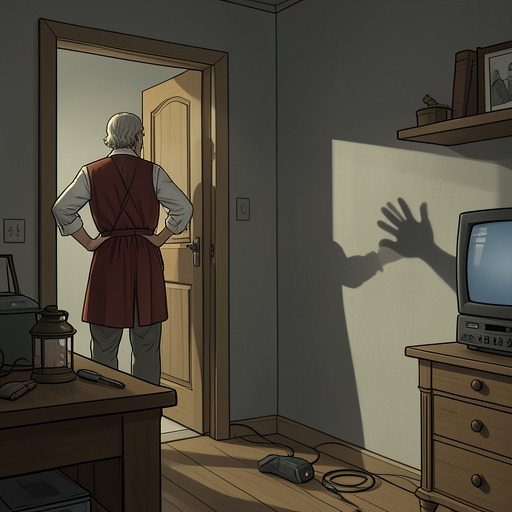
A situation arises when a free project organizes things into meaningful relations. The end comes first in this order of meaning: it arranges preceding actions and instruments as means, rather than being caused by them. In the example of someone listening at a door, the keyhole is not simply an object with an independent significance. It becomes an instrument because it is related to the end of seeing what is behind the door. Jealousy is the possibility organizing this arrangement, though the person is that jealousy without knowing it as an object of reflection. The situation is the whole practical ensemble: a spectacle to be seen, a keyhole through which to see it, and the project that makes these things matter together.
This arrangement reflects both facticity and freedom. The person does not choose the existence of the surrounding world as though choosing an object, but the project gives the world’s features their significance as tasks and possibilities. In this sense, the listener cannot simply define himself as someone listening at doors: his being is not a fixed attribute he can observe from outside, and his freedom carries him beyond any provisional description. Situation thus connects a concrete act to the wider structure of self-escape that makes a settled self-description inadequate.
The given does not cause freedom, supply its reason, or serve as ready-made material upon which an already constituted freedom works. Freedom internalizes the given through negation: it projects an end that makes the existing world appear insufficient in a particular way. By choosing an end, freedom discloses a datum as one thing rather than another, in the light of a single project. Situation names the contingency of freedom amid the plenitude of the world, where the given is revealed already illuminated by a freely chosen end.
How a project makes obstacles meaningful
Situation and motivation are inseparable because a state of affairs appears as a reason for defense, attack, or some other response only in relation to an end. The same worldly facts can therefore appear threatening or favorable depending on the project through which they are encountered. Freedom does not erase the brute existence of things: it can make a crag salient as an obstacle to climbing, but cannot decide by choice alone whether the rock will in fact bear a climber’s weight.
The crag clarifies the difference between a project’s meaning and the world’s resistance. To a climber, the rock is disclosed as scalable or not scalable in the light of the project of climbing. A traveler intent on arranging the landscape aesthetically does not encounter it under that description; it appears instead as beautiful or ugly. The rock’s resistance is real, but it becomes resistance to a projected end only within a situation constituted by freedom. An obstacle is encountered within the field of possibilities, not as a meaning-free obstacle that dictates a project from outside.
The body and the desired task further qualify what the rock can mean. With the desire to climb held constant, an athletic climber may find the rock easy and a novice with a weak, untrained body may find it difficult. Yet the body itself is disclosed as trained or weak in relation to a freely chosen undertaking. A person who stays in the city, attends to business or intellectual work, and does not take up sports does not encounter the body’s qualities under the same practical terms. For a lawyer pleading a case in the city, the rock may remain submerged in the undifferentiated totality of the world, neither hard nor easy to climb. The rock’s coefficient of adversity is therefore relational: it depends on the meeting between the project, the body, and the given terrain.
The resulting paradox is reciprocal. Freedom exists only in a situation, because it must act amid facticity; a situation exists only through freedom, because the project gives facts their significance as aids, dangers, and obstacles. Human beings encounter resistances they did not create, but those resistances acquire practical meaning through the free choices by which they engage the world. The account does not make every condition chosen: it distinguishes the brute fact from the way a project discloses and lives that fact.
The Other and the loss of mastery
The Other’s look changes the situation by reorganizing it from a standpoint the person does not control. Before that look intervenes, the dark corner in a hallway can appear as an invitation to hide, its darkness a potentiality within the person’s own instrumental world. When the person apprehends himself as seen, he is grasped in the world through relations to objects: seated as seated-on-a-chair, or bent over as bent-over-the-keyhole. His possibilities remain his in non-thetic consciousness, but the look alienates them by presenting them as available to another freedom and capable of being surpassed by that freedom.
The world itself is drawn into this alienation. The chair from which the person is seen, for example, slips out of the organization he had given it and enters a different complex of relations and distances, oriented around the Other. The dark corner can now disclose not only the possibility of hiding but the possibility that the Other will pass beyond it and illuminate it with a flashlight. That alternative is present to the person precisely as a possibility belonging to the Other, one that the person cannot make his own or fully command.
Accordingly, the person remains an agent in the situation but is no longer its sole master. Even in solitude, an act can have consequences contrary to desire: gently drawing a small platform toward oneself can tip a bronze statuette and break a fragile vase. In that case, the reversal could have been anticipated by more careful observation of the objects’ arrangement. The Other introduces a different kind of reversal: an aspect of the situation that is for another person and therefore escapes the agent in principle. Gide’s phrase for this unpredictable but real reverse side is “the devil’s part.”
The Other also fixes the situation into a form, a synthesis in which the person becomes an essential structure without knowing the whole. When a person looks at others, he can make them objects and measure his power through that look. If another person sees both him and those others, however, his look loses that power: it cannot make them objects for the Other, who already sees them. His relations and attitudes can instead appear as an organized whole, a look-as-object, with distances and means arranged around a presence he does not control. To apprehend oneself as looked at is thus to encounter oneself as spatialized within another’s world.
A relation that is neither subjective nor objective
Situation cannot be considered from outside as a complete object, nor reduced to the subject’s impressions. Its component things may be strictly objective—a cup used by someone, a table leaned upon—but their place in the situation belongs to a relation between the person and the world. The person is not merely surrounded by things as an independently describable object; choosing a manner of being makes that surrounding intelligible as a field of danger, obstacle, assistance, and utility.
Nor is situation a subjective synthesis added to otherwise bare objects. It is the things themselves and the person among them, disclosed as the person surpasses what is given toward an end. In the account’s formulation, situation is both the whole subject, who is nothing apart from this way of being situated, and the whole thing, since there is no extra world beyond the things encountered. The world refers the subject’s image back to him, while the subject’s surpassing illuminates the world. Situation is therefore a relation of being, not simply a kind of knowledge or an affective interpretation.
This account makes situation at once facticity and freedom. It includes the absolute contingency of the world, birth, place, past, environment, and the presence of fellow human beings; it also includes the freedom through which these contingencies become a lived arrangement. The image of a dusty, ascending road brings the two together: thirst, bodily fatigue, people who refuse water because the traveler lacks money or belongs to another country or race, and the possibility of failing to reach a chosen goal do not form a meaningful whole by themselves. The goal, whether explicitly formulated or not, is what organizes these facts into an intelligible situation rather than a disorderly nightmare.
Situation, action, and lived continuity
Situation cannot be equated either with the free result of an isolated choice or with a collection of constraints imposed upon a passive subject. Freedom groups existents into instrumental complexes and projects the ends that connect them. In acting toward those ends, the person meets sequences, linked series, and practical laws that can determine success or failure. These relations are not simply given as a finished order, yet once freedom undertakes a project, it encounters the consequences of the order it has entered. Freedom thus binds itself in the world through the very projects by which it acts.
The concept also explains why a person may seem to retain a substantial, stable character. The For-itself is a temporalization: it makes itself rather than resting as a completed substance. Persevering in one project is not the possession of an unchanging inner core; it is a continual renewal of engagement. Meanwhile, places, environments, and the realities illuminated by a developing project have the permanence of things. Their apparent endurance can be mistaken for the person’s own permanence, as the world and the judgments of others return a stable image of him. Situation therefore names not only where and under what conditions someone acts, but the changing relation through which freedom inhabits given facts and is reflected back to itself.